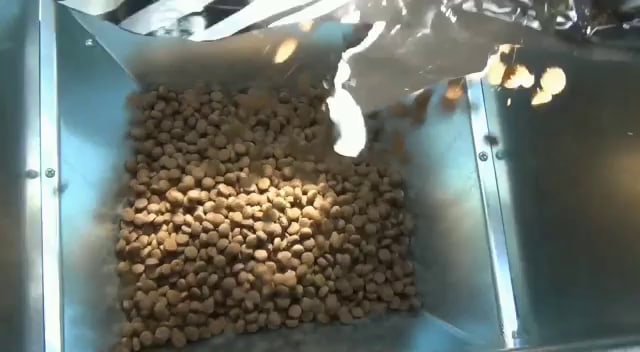
An automatic dog feeder keeps dry food in a hopper and releases a serving at each time you set, without anyone having to be there. It's worth it when the dog eats at times when nobody is around, when it lives outdoors or when it's better off with its food split into several feeds. It doesn't pay off if the dog needs an exact serving to the gram or eats wet food, and it's no good for leaving the dog alone for several days.
How does an automatic feeder work?
All automatic feeders have the same four parts, whether they're large or small:
- The hopper, where the dry food is kept. Its size decides how many days it lasts without refilling.
- The mechanism, which takes the serving out of the hopper: an auger, a wheel or a gate.
- The timer, which decides when food comes out and how much.
- The power supply, which can be a socket, batteries or a rechargeable battery.
At the set time, the timer starts the mechanism, the serving drops into a bowl or a tray and the dog eats. The rest of the dry food stays stored in the hopper until the next feed.
What types of automatic feeder are there?
They differ mainly in how they get the dry food out and where they're designed to go:
- With an auger. A spiral pushes the dry food and allows very precise servings; its weak point is large kibble, which jams it.
- Gravity feed. A gate opens and the dry food falls by its own weight; it's less precise, but there's no narrow passage to jam in.
- With an app and a camera. They're usually small indoor dispensers programmed from a phone.
- Self-feed hopper. It has no timer: the dry food drops into the bowl as the dog eats.
How each system works is explained in the comparison of gravity feed and auger. And if you're torn between a hopper and a programmable feeder, you'll find it in the post on self-feed hoppers and app-controlled feeders.
Is an automatic dog feeder worth it?
It pays off above all in four cases:
- The dog lives outdoors, in a yard, a garden or on a smallholding, and nobody can come by at the same time every day.
- The household's hours don't match the dog's because of shift work or long working days.
- The dog eats greedily and is better off with its serving split into several small feeds.
- There are several dogs and you want to see who's eating, instead of leaving one full bowl for everyone.
In the first two cases, what it solves is that the dog eats on time even when nobody is around. In the other two, that the serving is measured. How many feeds suit each dog is explained in the post on how many times a day a dog should eat.
When is an automatic feeder not worth it?
- If the dog is on a diet measured to the gram on the vet's instructions. A gravity-feed feeder doesn't weigh the serving; an auger one comes closer, but it's worth checking with the scales.
- If it eats wet food. A hopper feeder is for dry food: wet food can't sit for hours in a hopper.
- If the idea is to leave the dog alone for several days. The feeder feeds the dog, but it can't see whether the dog is well, whether it has water or whether it has got out.
That last point is covered in depth in the post explaining why a feeder is no substitute for a person.
What are the drawbacks of an automatic feeder?
It does have some, and it's worth knowing them before you buy one:
- It needs refilling and cleaning. How often depends on the hopper, and the bowl and the outlet are worth cleaning often.
- It needs power. A socket nearby, batteries to change or a battery to charge every so often.
- The serving is approximate on many devices, so for the first few days you need to weigh what it releases.
- The feeder doesn't know whether the dog is eating. If the dog stops eating, the device keeps releasing dry food on schedule, and someone has to check the bowl.
If you decide to get one, the first thing is the schedule: what schedule to set on a programmable dog food dispenser. And the second, the serving: how to measure how much dry food a portion dispenser releases.
What is a Producan automatic feeder like?
It's a gravity-feed feeder designed to live outdoors: a hopper made of 0.8 mm galvanised steel sheet with a 40-litre capacity, around 15 kilos of dry food, IP65 protection and a timer with up to 30 feeds a day that doesn't lose its schedule if the power goes off for a while. We make it in our workshop in Galicia.
To compare types and brands, the automatic feeder buying guide goes through the five points that matter.
Producan's automatic dog feeders come in two models: the P1, which plugs into 220 V, for yards and smallholdings with power, and the P3, with a 12 V battery, for places the socket doesn't reach.